What Your Dog’s Poop Says About Their Health
Introduction
What your dog’s poop says about their health might surprise you. Dog owners often overlook pet waste, but veterinarians consider it one of the most useful tools for spotting problems early. Whether you live in Centennial, Parker, Aurora, or Highlands Ranch, keeping an eye on your pup’s poop can help you take better care of them.
In this article, we’ll break down what different colors, shapes, and textures mean, why regular cleanup matters, and how a poop scoop service like Happy Scoop helps you monitor your pet’s health while keeping your yard clean.
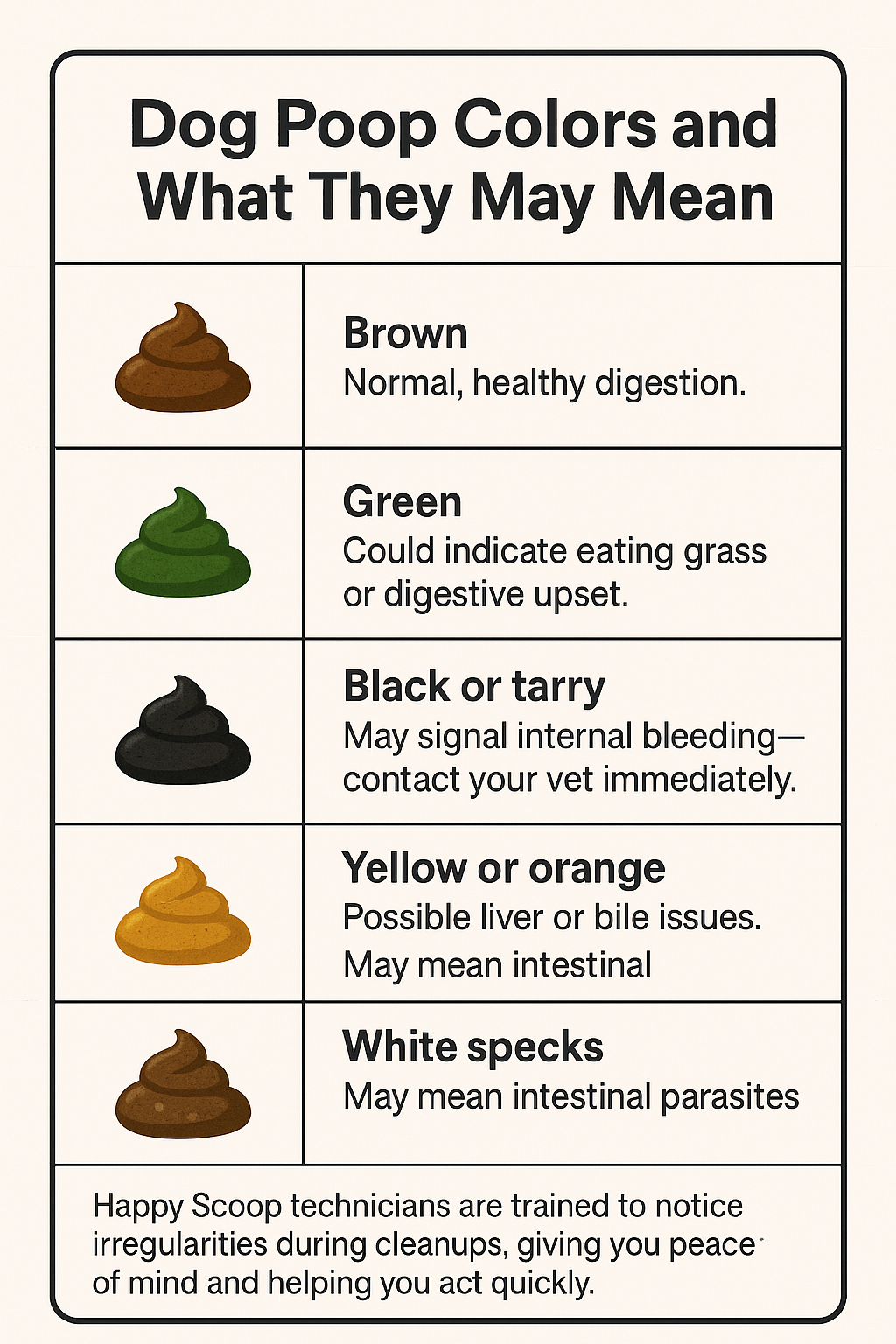
Understanding the Color of Dog Poop
Dog poop color is often the first clue something may be wrong. A healthy stool should be chocolate brown, but variations can signal changes in diet or health.
- Brown: Normal, healthy digestion.
- Green: Could indicate eating grass or digestive upset.
- Black or tarry: May signal internal bleeding—contact your vet immediately.
- Yellow or orange: Possible liver or bile issues.
- White specks: May mean intestinal parasites.
Happy Scoop technicians are trained to notice irregularities during cleanups, giving you peace of mind and helping you act quickly.
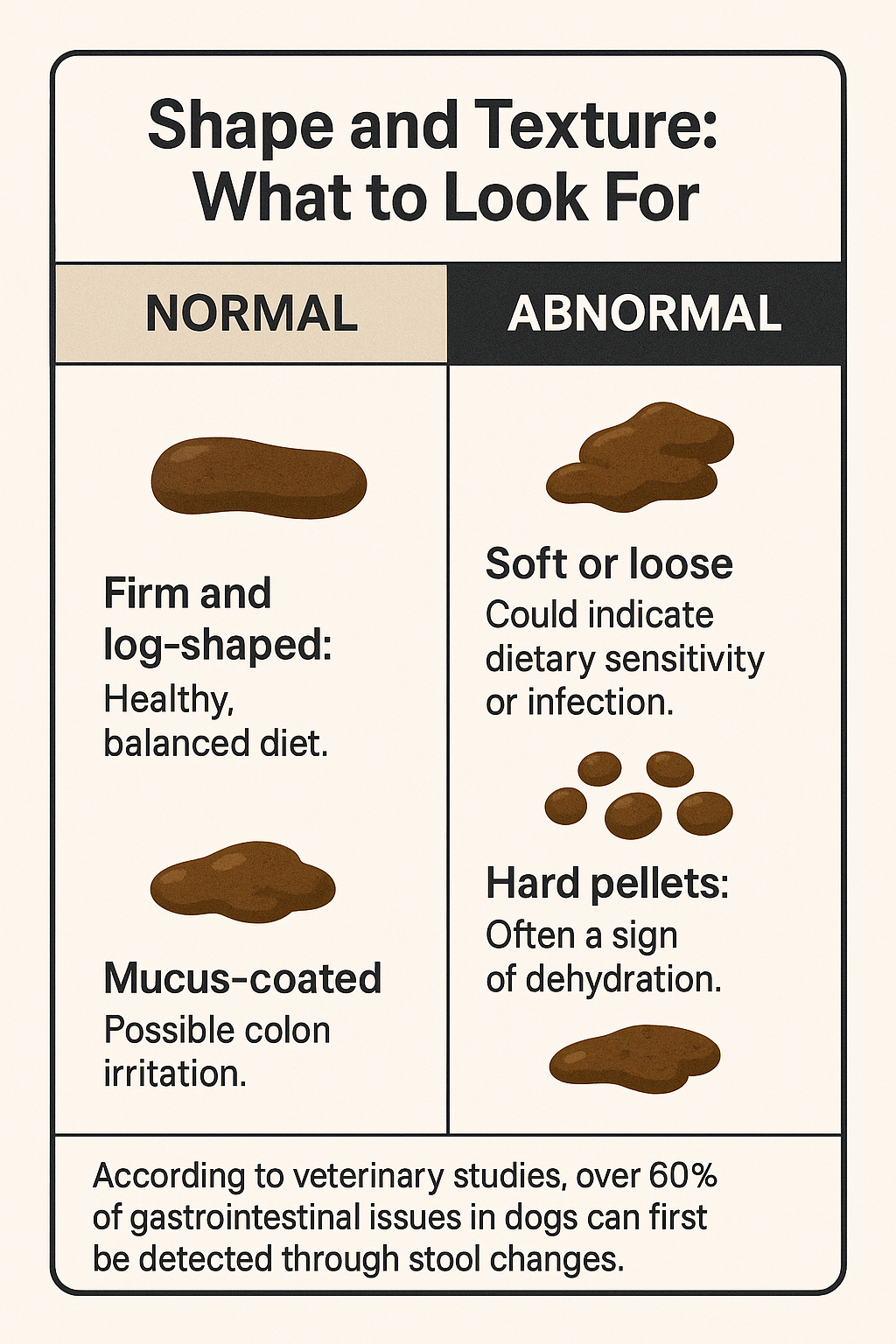
Shape and Texture: What to Look For
The shape and consistency of dog poop is just as important as color.
- Firm and log-shaped: Healthy, balanced diet.
- Soft or loose: Could indicate dietary sensitivity or infection.
- Hard pellets: Often a sign of dehydration.
- Mucus-coated: Possible colon irritation.
According to veterinary studies, over 60% of gastrointestinal issues in dogs can first be detected through stool changes.
When Dog Poop Signals a Problem (and the Solution)
Dog poop cleanup is more than lawn care—it’s an early warning system for your pet’s health. Unfortunately, busy schedules mean many owners miss the signs.
That’s where Happy Scoop’s blog and cleanup services come in. By keeping your yard consistently clean, you’ll be able to notice changes right away. If your dog’s waste looks unusual—especially if it persists for more than 24–48 hours—it’s time to call your veterinarian.
FAQ: Dog Poop and Health
How often should I check my dog’s poop?
Can diet changes affect my dog’s poop?
Should I save a sample for the vet?
Conclusion
Your dog’s poop is more than just a mess to scoop—it’s a window into their health. By watching for changes in color, shape, and consistency, you can protect your pet and catch issues early.
Keep your yard clean—schedule a cleanup today!
